Why Choose SLU-PP-332?
SLU-PP-332 is a synthetic small molecule and research tool compound developed as a pan-agonist of the estrogen-related receptors (ERRα, ERRβ, and ERRγ). It has garnered significant interest in metabolic research as a potential “exercise mimetic” due to its ability to activate gene programs associated with aerobic exercise and enhance mitochondrial function in preclinical models. Understanding its origins and distinct mechanisms provides important context for researchers.
The History & Origins
SLU-PP-332 was developed at Saint Louis University School of Medicine by the Burris laboratory as a pharmacological tool for studying estrogen-related receptor biology. The compound was first characterized in 2023 in a foundational paper published in ACS Chemical Biology, which described it as the first synthetic pan-agonist capable of targeting all three ERR subtypes—ERRα, ERRβ, and ERRγ—with sufficient pharmacokinetic properties for in vivo use.
The development of SLU-PP-332 addressed a long-standing challenge in nuclear receptor research: previous ERR-targeting compounds lacked significant ERRα agonist activity or had unsuitable pharmacokinetic properties for in vivo studies. The compound belongs to the hydrazone class and exhibits its highest potency for ERRα, with an EC₅₀ of 98 nM.
Estrogen-related receptors are nuclear transcription factors identified in 1988 based on sequence homology to estrogen receptors. Despite their name, they do not bind estrogen—they are constitutively active transcription factors regulated by cellular energy status rather than by estrogen itself. ERRs are recognized as master regulators of mitochondrial biogenesis, oxidative phosphorylation, and fatty acid metabolism.
How They Work: Distinct Mechanisms
SLU-PP-332 operates through activation of estrogen-related receptors, which are central to the transcriptional control of cellular energy metabolism.
Pan-ERR Agonist Research Mechanisms
ERRα activation (EC₅₀ = 98 nM) — The compound exhibits highest potency for ERRα, driving the induction of an ERRα-dependent acute aerobic exercise genetic program in skeletal muscle, including upregulation of genes such as Ddit4 and Slc25a25—a transcriptional signature resembling that observed after endurance exercise
ERRβ activation (EC₅₀ = 230 nM) — Contributes to the broader metabolic transcriptional program, with activity across all three receptor subtypes being central to the “exercise mimetic” hypothesis
ERRγ activation (EC₅₀ = 430 nM) — Research indicates ERRγ is the main mediator of ERR agonism-induced transcriptional regulation and cardioprotection in cardiac tissue
Mitochondrial function enhancement — Activates metabolic pathways that increase mitochondrial respiration in skeletal muscle cells through upregulation of PGC-1α, the master regulator of mitochondrial biogenesis
Functional selectivity — Demonstrates selectivity over the classical estrogen receptors ERα and ERβ, as well as other closely related nuclear receptors
Key Research Findings
All efficacy data for SLU-PP-332 comes from mouse studies. None of the findings described below have been replicated in humans.
Endurance and Skeletal Muscle: In mouse studies, SLU-PP-332 (50 mg/kg, intraperitoneal) enhanced treadmill running distance and running time, increased type IIa oxidative skeletal muscle fibers, and induced an ERRα-dependent acute aerobic exercise gene program. Treated mice showed enhanced endurance with the gene program including targets associated with fatty acid oxidation, mitochondrial electron transport chain components, and oxidative fiber specification.
Metabolic Effects: In diet-induced obese mouse models, SLU-PP-332 reduced fat mass accumulation with decreases in adipocyte size, increased energy expenditure and fatty acid oxidation, and improved insulin sensitivity. In one study, mice receiving the compound twice daily for a month gained 10 times less fat than untreated mice, despite consuming the same amount of food.
Cardioprotection: In a mouse model of pressure-overload heart failure, SLU-PP-332 significantly improved ejection fraction, ameliorated cardiac fibrosis, and increased survival. These effects were mediated primarily through ERRγ and involved transcriptional activation of genes governing fatty acid metabolism and mitochondrial function.
Aging and Kidney Research: An 8-week treatment with SLU-PP-332 in aged mice reversed age-related increases in albuminuria, podocyte loss, mitochondrial dysfunction, and inflammatory cytokines, identifying the compound as a potential “caloric restriction mimetic
CAS Number: 2763669-67-8
Molecular Formula: C₂₀H₁₉ClN₂O₃ (verify)
Molecular Weight: [insert]
Purity: ≥98% (HPLC)
Form: Lyophilised powder
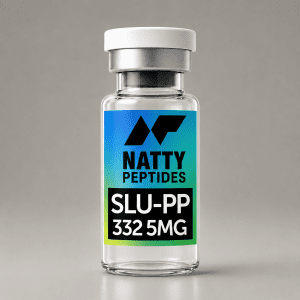
Quantity: 5mg per vialLaboratory research compound evaluated in controlled preclinical settings. Intended strictly for laboratory and educational research applications.
For research use only.
Restricted to in vitro laboratory experimentation and cannot be used in clinical or investigational studies, applied in any medical or therapeutic context, or distributed for purposes outside regulated laboratory research.
This compound is not a peptide. No claims are made regarding ERR agonism, metabolic effects, or exercise-related outcomes.
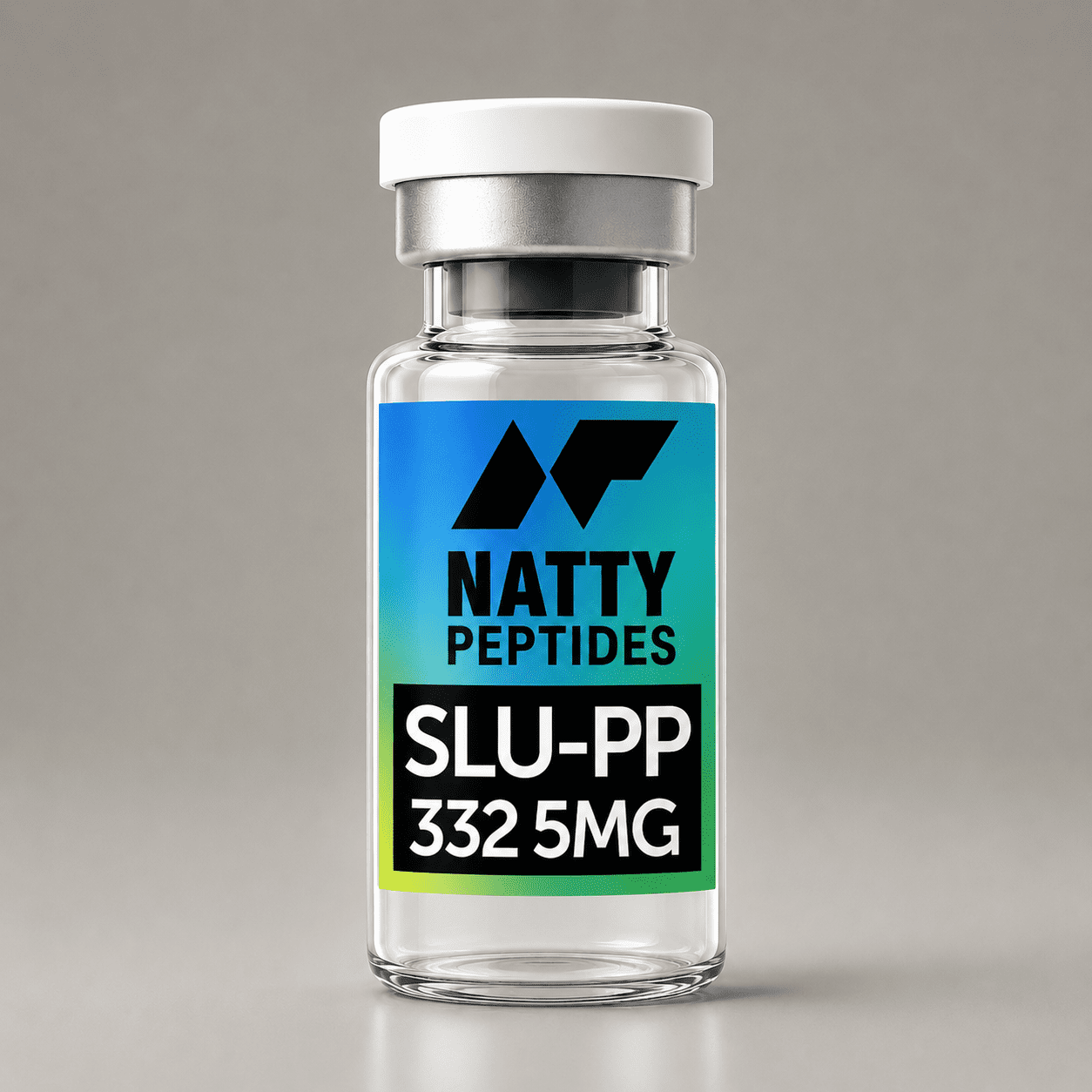
SLU-PP-332 5MG
£39.95
Laboratory research compound evaluated in controlled preclinical settings. Intended strictly for laboratory and educational research applications.
For research use only.
Restricted to in vitro laboratory experimentation and cannot be:
-
Used in clinical or investigational studies
-
Applied in any medical or therapeutic context
-
Distributed for purposes outside regulated laboratory research
Availability: 29 in stock
Related products
-
KPV (Lysine-Proline-Valine) Tripeptide 10 MG
Original price was: £49.95.£39.95Current price is: £39.95. Add to basket