Why Choose IGF-1 LR3?
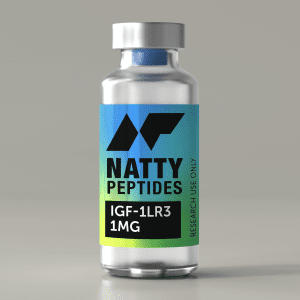
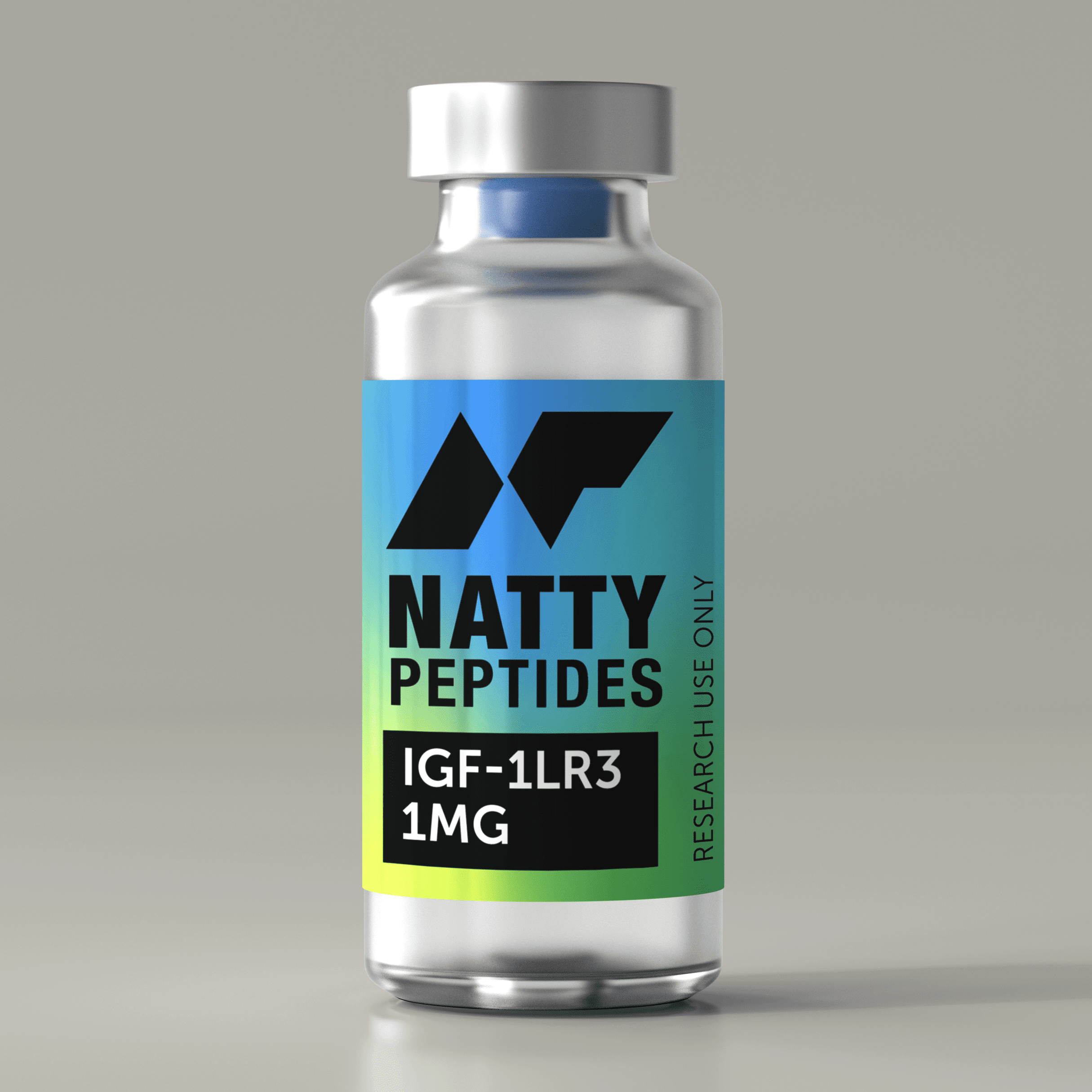
Insulin-like Growth Factor-1 LR3 (IGF-1 LR3) is a synthetic, 83-amino-acid analogue of the naturally occurring peptide hormone IGF-1. It is distinguished by a specific modification—a substitution of Arginine for Glutamic Acid at position 3—and an N-terminal extension peptide. This analogue was engineered to be a highly potent research tool for studying cell proliferation, differentiation, and tissue growth, with a mechanism centered on its reduced interaction with IGF-binding proteins. Understanding its distinct origins and key mechanistic differences from native IGF-1 provides essential context for researchers.
The History & Origins
The hormone IGF-1 (initially known as somatomedin C) was first described in 1957 and characterized as a key mediator of growth hormone’s anabolic effects. It is a member of the IGF family, which includes insulin and IGF-2, and is crucial for childhood growth and metabolic functions in adults.
IGF-1 LR3 was developed as a research reagent with enhanced biological potency. The specific structural modification—an Arginine substitution at position 3—dramatically alters its interaction with the family of IGF-binding proteins (IGFBPs), which are the primary regulators of IGF-1’s half-life and bioavailability in the body. By reducing its affinity for these binding proteins, IGF-1 LR3 was designed to be more potent than natural IGF-1 in research applications.
How They Work: Distinct Mechanisms
IGF-1 LR3 operates through a mechanism that is distinct from both native IGF-1 and other growth factors, primarily due to its engineered resistance to IGFBPs.
Reduced IGFBP Binding: The Key to Altered Potency
In the body, IGF-1 is largely bound to a family of seven IGF-binding proteins (IGFBPs) that extend its half-life and control its access to tissues. An estimated 75% of circulating IGF-1 is bound to IGFBP-3, regulating its availability. IGF-1 LR3 has an approximately 1000-fold lower affinity for IGFBPs compared to native IGF-1. This reduced binding has a dual effect:
-
Increased Potency: In cell culture and animal models, the reduced interaction with IGFBPs gives IGF-1 LR3 a 5- to 10-fold greater biological potency in vitro, as it is more available to bind to the IGF-1 receptor.
-
Faster Clearance: Paradoxically, this low affinity for binding proteins also means IGF-1 LR3 is cleared from the blood much more rapidly than native IGF-1. Studies have shown it is removed from the plasma more quickly, a difference directly attributed to its poor association with IGFBPs.
IGF-1 Receptor Activation
Despite its rapid clearance, IGF-1 LR3 retains high affinity for the type 1 IGF receptor (IGF-1R), binding to it with similar affinity as wild-type IGF-1. Activation of IGF-1R promotes key signaling pathways—including the MAPK and PI3K cascades—which are fundamental to cell survival, proliferation, differentiation, and protein synthesis.
Key Research Findings
Efficacy data for IGF-1 LR3 comes from preclinical studies, where it has been investigated in diverse models.
-
Anabolic and Growth Effects: Chronic administration of IGF-1 LR3 has been shown to produce marked increases in body weight, nitrogen retention, and food conversion efficiency in normal female rats, demonstrating its potent anabolic effects. In these studies, IGF-1 LR3 was found to be up to 6 times more potent than IGF-1 in promoting growth.
-
Alzheimer’s Disease Research: In a 7-month study on a mouse model of Alzheimer’s disease (5XFAD mice), intranasal administration of IGF-1 LR3 improved body composition and promoted favorable remodeling of amyloid-beta plaques in the cerebral cortex, including a reduction in filamentous plaques. However, it failed to preserve cognitive function or memory in these models, suggesting it may not be effective as a standalone treatment for cognitive decline.
-
Fetal Growth Research: In a study on fetal growth restriction (FGR), a one-week infusion of IGF-1 LR3 directly into growth-restricted fetal sheep did not improve fetal growth. It did, however, decrease circulating amino acids, which could indicate increased amino acid utilization by tissues.