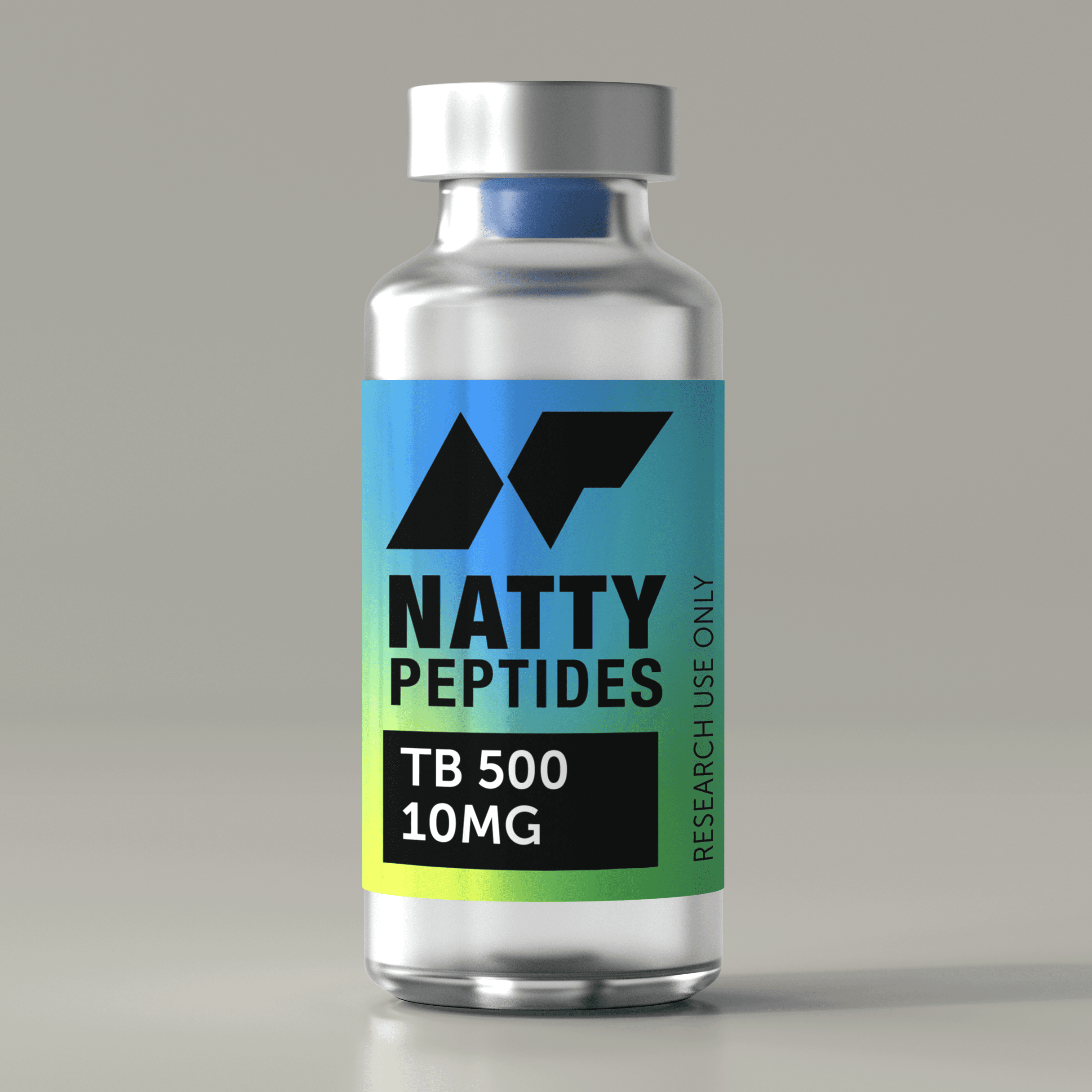
View TB-500 Certificate of Analysis
Why Choose Thymosin Beta-4 Acetate (TB-500)?
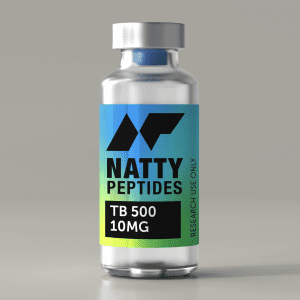
Thymosin Beta-4 (TB-500) is a synthetic version of a naturally occurring 43-amino-acid polypeptide found in virtually all human and animal cells . It is one of the most extensively studied peptides in tissue repair, wound healing, and regenerative medicine research. Understanding its distinct origins and mechanisms provides important context for researchers.
The History & Origins
Thymosin Beta-4 was first isolated from the thymus gland, which is how it derived its name, but it was subsequently discovered to be present in nearly all tissues and cell types . It is a highly conserved peptide across species, found in organisms from mammals to lower vertebrates, indicating a fundamental biological role . TB-500 is the synthetic acetate salt form of this naturally occurring peptide .
The peptide is encoded by the TMSB4X gene located on the X chromosome in humans . It was initially characterized as a thymic hormone, but later research revealed it is a ubiquitous and multifunctional peptide involved in a wide range of cellular processes including actin sequestration, cell migration, angiogenesis, and wound healing .
How It Works: Distinct Mechanisms
TB-500 operates through a well-defined mechanism of action that distinguishes it from other tissue repair peptides, making it a valuable tool for regenerative and wound healing research.
Actin Binding and Cell Migration
-
Primary mechanism — The most well-established and understood function of Thymosin Beta-4 is its ability to bind to G-actin (globular actin). By sequestering G-actin, it regulates actin polymerization and dynamics, which is crucial for cell motility .
-
Cell migration — This actin-binding activity is central to TB-500’s role in promoting cell migration. It facilitates the movement of cells such as endothelial cells, keratinocytes, and fibroblasts to sites of tissue damage, which is essential for wound closure and tissue repair .
Angiogenesis and Vasculogenesis
-
Promotes new blood vessel formation — TB-500 has been shown to stimulate angiogenesis, the formation of new blood vessels from pre-existing ones. It enhances the migration of endothelial cells and promotes the sprouting of new capillaries .
-
Biological mechanism — This angiogenic effect is mediated through the activation of the MAPK/ERK signaling pathway and the upregulation of matrix metalloproteinases (MMPs), which are involved in extracellular matrix remodeling .
Regulation of Inflammation and Cytokines
-
Anti-inflammatory properties — TB-500 exhibits potent anti-inflammatory effects by reducing the production of pro-inflammatory cytokines, including IL-1β, IL-6, TNF-α, and the chemokine IL-8 . In an experimental arthritis model, systemic administration of TB-500 significantly reduced synovitis, cartilage destruction, and inflammatory cell infiltration .
-
Macrophage modulation — The peptide shifts macrophage polarization toward an anti-inflammatory (M2) phenotype, which is associated with tissue repair and resolution of inflammation .
-
Mechanism — The anti-inflammatory effects are partially mediated through downregulation of the NF-κB pathway, a master regulator of the inflammatory response .
Tissue Protection and Cell Survival
-
Anti-apoptotic effects — TB-500 has been shown to protect cells from apoptosis (programmed cell death) by downregulating the expression of pro-apoptotic genes such as Bax and caspase-3, while upregulating the anti-apoptotic gene Bcl-2 .
-
Promotes cell survival — It promotes the survival of various cell types, including cardiomyocytes and neurons, under stress conditions such as hypoxia and oxidative stress .
The Synergistic Potential
TB-500 is widely studied in combination with other peptides, particularly BPC-157, to leverage complementary mechanisms for tissue repair research . The synergy in these research combinations is based on their distinct yet complementary effects: BPC-157 is considered more localized in its action, focusing on vascular signaling and specific tissue environments, while TB-500 operates systemically, influencing actin dynamics and cellular motility throughout the body . Together, they represent a multi-pathway approach to tissue repair research, with TB-500’s actin-mediated effects providing the cellular migration and structural organization necessary for repair, complementing BPC-157’s vascular and localized effects
Laboratory research compound evaluated in controlled preclinical settings. Intended strictly for laboratory and educational research applications.
For research use only.
Restricted to in vitro laboratory experimentation and cannot be used in clinical or investigational studies, applied in any medical or therapeutic context, or distributed for purposes outside regulated laboratory research.
No claims are made regarding actin binding, cell migration, tissue repair, inflammation, wound healing, or any physiological effect.