What is IGF-1 LR3?
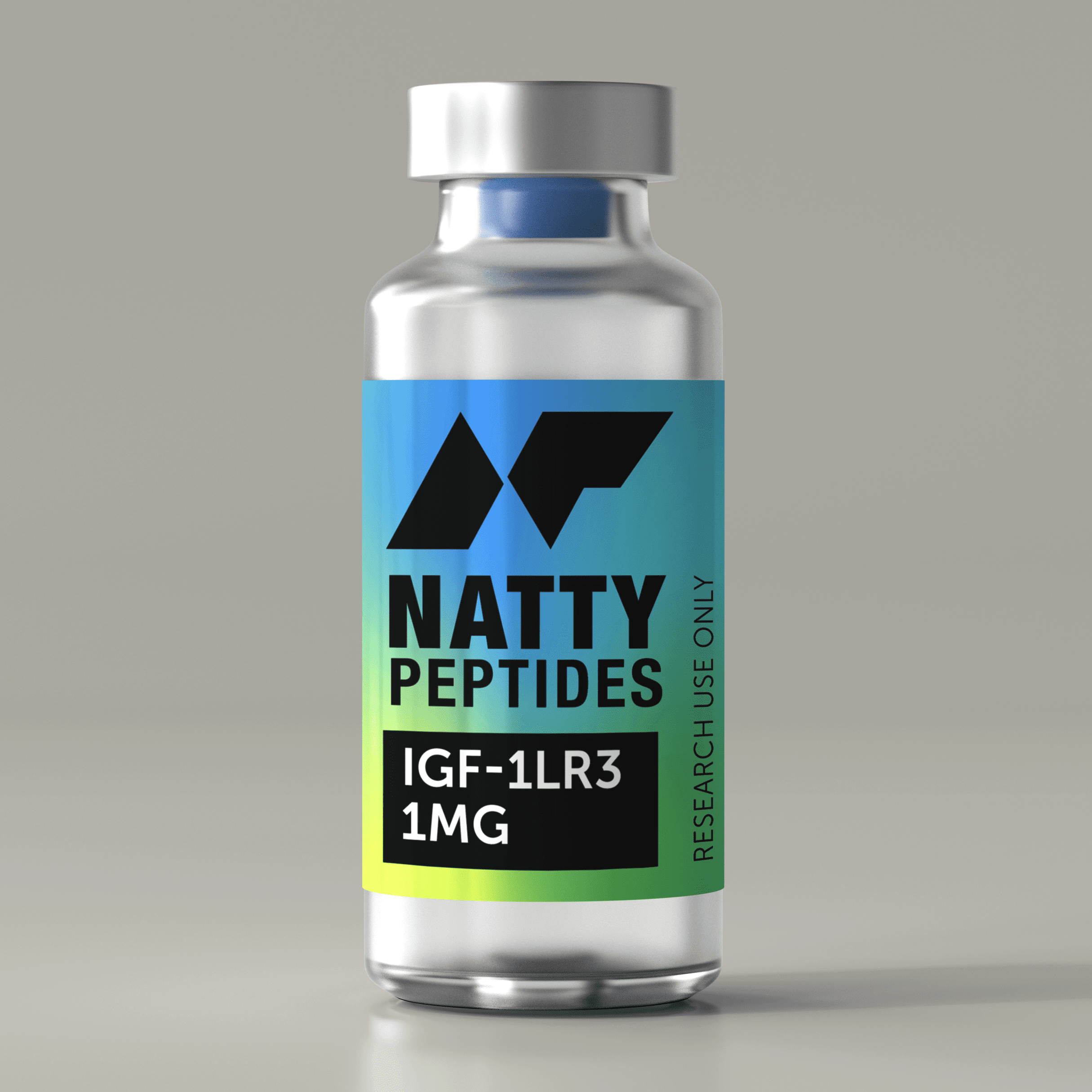
Think of IGF-1 LR3 as a supercharged, long-lasting version of a critical repair hormone. It is a modified form of Insulin-like Growth Factor 1 (IGF-1), which is a natural hormone that drives growth and recovery in the body. The “LR3” modification means it has an altered amino acid sequence and an extra 13-amino acid chain. This change makes it far more potent and prevents it from being deactivated quickly, allowing it to circulate and work in the body for many hours instead of minutes.
The Main Benefits Researchers Look At:
-
Potent Systemic Growth & Repair: This is the central focus. IGF-1 LR3 is studied for its powerful, body-wide anabolic (building) effects. Research examines its ability to promote nutrient uptake into cells, stimulate protein synthesis, and inhibit protein breakdown across muscle, bone, and connective tissues.
-
Extended Activity Window: Due to its modification, it has a very long half-life (several hours). Researchers specifically leverage this to study sustained metabolic and growth effects from a single administration, unlike its short-acting natural counterpart.
-
Muscle Hypertrophy & Recovery: It is a key compound in research on muscle building (hypertrophy) and accelerated recovery from exercise or injury, as its prolonged signaling can continuously promote repair processes.
-
Reduced Binding Inhibition: A key research point is its lowered affinity for IGF-binding proteins in the blood. This means more “free” and active IGF-1 LR3 is available to stimulate receptors, leading to a more pronounced and observable effect in studies.
How Researchers Might Use It (Subcutaneous Injection with Bac Water):
IGF-1 LR3 is primarily studied via subcutaneous injection after reconstitution with bacteriostatic water (bac water). Its long action makes this the preferred route for systemic research.
Here’s a simple step-by-step of how a study might be set up:
-
Mixing & Handling: The researcher takes a vial of IGF-1 LR3 (lyophilized powder) and reconstitutes it with a precise amount of sterile bac water using gentle swirling. Due to its high potency, handling and dosing are done with precision.
-
Injecting: Using a small insulin syringe, a measured dose is injected just under the skin (into the subcutaneous fat layer, often in the abdomen or thigh). This allows for slow, steady release into the bloodstream.
Why This Method?
-
Optimal Systemic Delivery: The research goal is often to study whole-body effects. Subcutaneous injection provides a slow, continuous release of the peptide into circulation over many hours, perfectly matching its long half-life and ensuring sustained exposure to tissues.
-
Maximizes Bioavailability: Injection protects the modified peptide from stomach acid, ensuring 100% of the dose enters the system to exert its prolonged effects.
-
Mimics Endocrine Action: As a hormone intended to work throughout the body, this method effectively replicates its endocrine function, allowing researchers to study its impact on various organ systems from a single point of administration.
-
Practical Dosing Schedule: Its long activity allows for simple once-daily (or even less frequent) dosing in research protocols, improving consistency and making long-term studies on muscle growth and metabolism more feasible to conduct.
The Goal of the Research:
The primary aim is to understand the effects of sustained, potent IGF-1 receptor stimulation on body composition, metabolism, and tissue repair. Researchers track increases in lean body mass, reductions in fat mass, and improvements in nitrogen balance (a marker of protein synthesis). They also study its impact on glucose metabolism and its potential role in skeletal muscle regeneration. The overarching goal is to map the anabolic pathways activated by long-term IGF-1 signaling and explore its therapeutic potential for conditions involving muscle wasting or impaired recovery.
In simple terms: By mixing IGF-1 LR3 with bac water and using a simple under-the-skin injection, researchers have an efficient tool to study how this “long-lasting growth signal” can promote powerful, systemic effects on muscle building, nutrient utilization, and recovery over an extended period.
IGF-1 LR3 is a long-acting analog of insulin-like growth factor-1, specifically modified for increased stability and a prolonged half-life. IGF-1 is a natural mediator of growth hormone activity, playing a direct role in muscle cell differentiation, hypertrophy, and tissue repair. LR3 has been shown to act on muscle and nerve tissues for longer periods, extending the anabolic window in laboratory studies. Researchers are particularly interested in its role in nutrient partitioning, where IGF-1 directs nutrients toward muscle growth rather than fat storage. Its systemic activity has made it a highly valued compound in studies of performance, recovery, and healthy ageing.