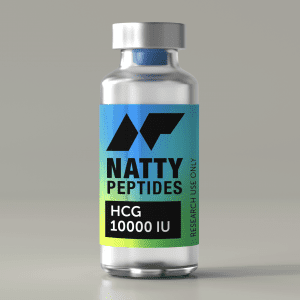
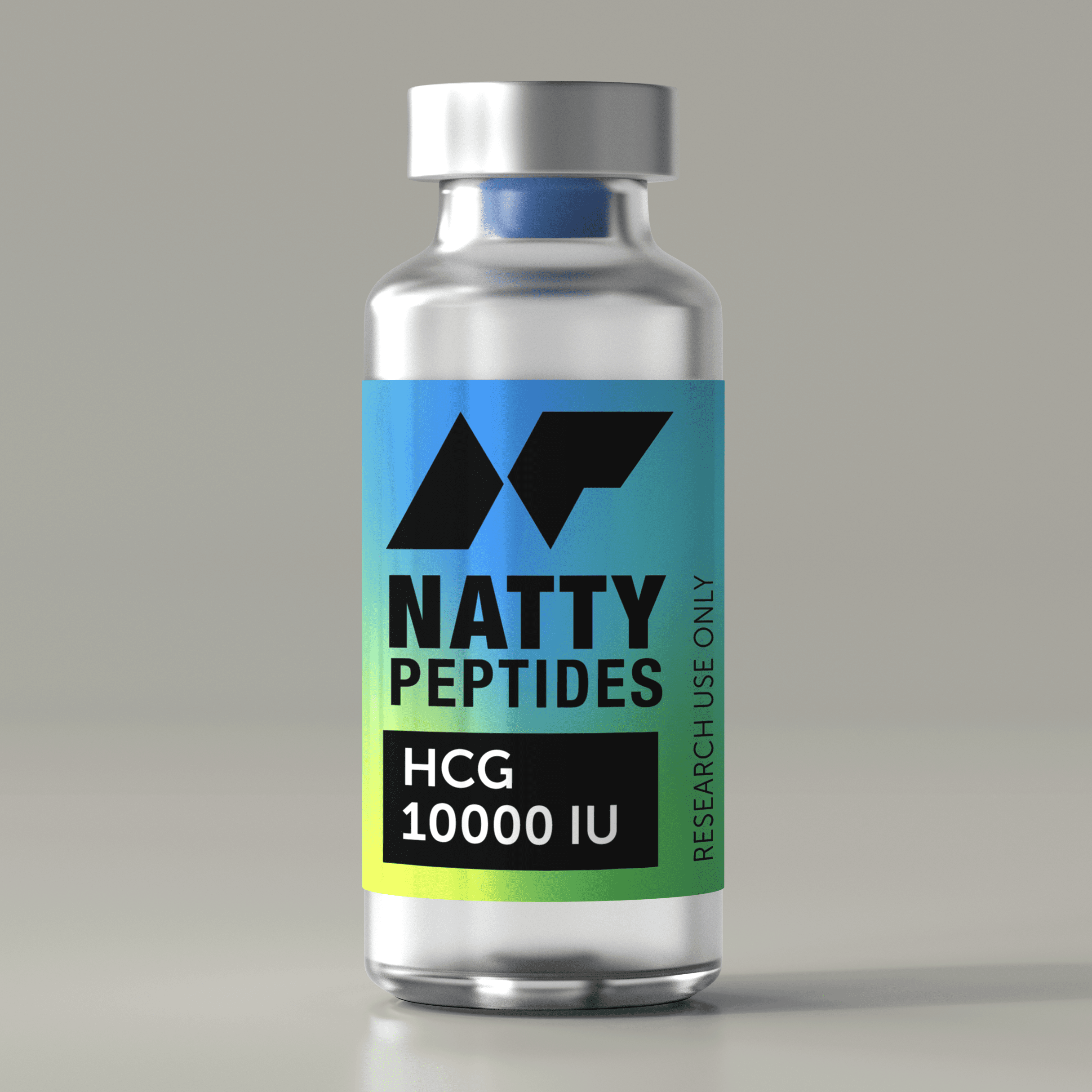
HCG (Human Chorionic Gonadotropin)

£49.95

Our peptides are to be used for research only.

RESEARCH FOCUS AREAS

  • Hormone Balance: Investigated for testosterone and reproductive health.
  • Age & Wellness: Studied for vitality and energy regulation.
  • Muscle Preservation: Explored for lean mass retention.

Availability: 10 in stock

- +

What is HCG?
Think of HCG as a powerful copy of the body’s primary signal to the reproductive system. It is a large, complex hormone that is nearly identical in structure and function to another key hormone called Luteinizing Hormone (LH). Its primary researched role is to send a direct and potent “go” signal to the gonads (testes in males, ovaries in females) to stimulate their core functions.

The Main Benefits Researchers Look At:

  • Stimulating Testosterone & Sperm Production (In Males): This is a major research focus. In male research models, HCG is used to directly stimulate the Leydig cells in the testes to produce and release testosterone naturally, and to support the process of spermatogenesis (sperm creation).

  • Supporting Ovarian Function (In Females): In female research models, HCG is studied for its critical role in triggering ovulation (the release of an egg from the ovary) and in supporting the early hormonal environment essential for the implantation of an embryo.

  • Preserving Endocrine Function: HCG is a key tool in research on male hormonal health, particularly for studying how to maintain testicular function, size, and testosterone production when the body’s natural signaling from the brain is absent or reduced.

  • Fertility & Reproductive Research: It serves as a foundational compound in a vast array of fertility studies, from in-vitro fertilization (IVF) protocols to investigations into hormonal triggers and support.

How Researchers Might Use It (Subcutaneous or Intramuscular Injection):
HCG is provided as a lyophilized powder that must be reconstituted. It can be studied via either subcutaneous (under the skin) or intramuscular (into muscle) injection, using the supplied sterile water or bacteriostatic water (bac water).

Here’s a simple step-by-step of how a study might be set up:

  1. Mixing: The researcher takes a vial of HCG powder and injects the provided diluent or a precise amount of bac water into it. They swirl gently—never shake—to dissolve the powder completely into a clear liquid.

  2. Injecting: Using an appropriate syringe, a measured dose is injected. For research, this is commonly done subcutaneously into the fatty tissue of the abdomen for convenience, though intramuscular injection into the thigh or glute is also standard.

Why This Method?

  • Direct Hormonal Action: HCG is a large protein hormone that would be completely destroyed if taken orally. Injection is the only viable research method to deliver it intact into the bloodstream so it can reach and act on its target organs.

  • Mimics Natural Physiology: By acting as an analog for LH, injecting HCG allows researchers to study the effects of direct, sustained gonad stimulation, bypassing the brain’s pituitary gland. This is crucial for isolating gonadal response.

  • Flexible & Effective Delivery: Both subcutaneous and intramuscular routes provide excellent bioavailability for HCG. The choice allows researchers flexibility in study design based on model species, dosing frequency, and desired absorption speed (IM is slightly faster).

  • Standardized Protocols: The use of HCG via injection is a well-established, gold-standard method in reproductive endocrinology research, allowing for reliable, comparable results across studies.

The Goal of the Research:
The primary aim is to understand and leverage direct gonadal stimulation for therapeutic and physiological insights. In male-focused research, scientists measure the resulting increases in serum testosterone, assess testicular size and function, and evaluate sperm parameters. In female-focused research, the timing of ovulation, oocyte (egg) quality, and corpus luteum support are key endpoints. Across both, HCG is an indispensable tool for exploring fertility treatments, hormonal replacement strategies, and the fundamental mechanics of reproductive health.

In simple terms: By mixing HCG with sterile water and using an injection, researchers have a direct and powerful way to deliver a “start your engines” signal to the reproductive organs, allowing them to study natural testosterone production, ovulation, and the essential processes of fertility and hormonal function.

HCG is a naturally occurring hormone best known for its role in reproductive health, but in research, it has been widely studied for its effects on hormonal balance and vitality. HCG mimics luteinizing hormone (LH), stimulating natural testosterone production in males, while in females, it plays a role in ovulation and fertility. Researchers have investigated HCG’s potential in preserving muscle mass, supporting hormone regulation, and maintaining energy balance. It has also been explored in anti-ageing and wellness studies, where hormonal stability plays a key role in vitality and resilience. Its ability to influence multiple endocrine pathways makes HCG a versatile peptide for research into hormone optimisation.

View HCG Certificate of Analysis

Shopping Basket
HCG (Human Chorionic Gonadotropin)HCG (Human Chorionic Gonadotropin)
£49.95

Availability: 10 in stock

- +