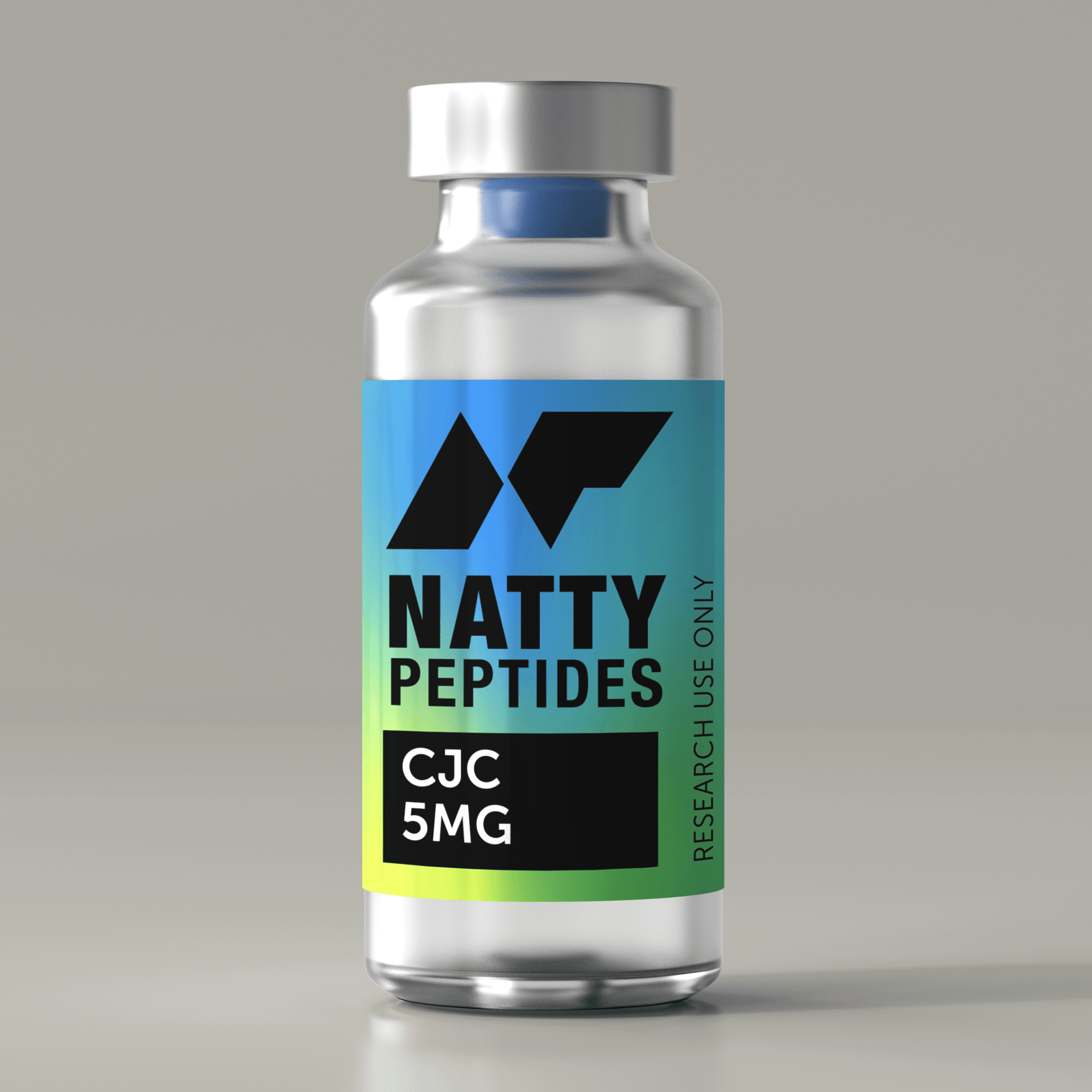
Why Choose CJC-1295 Without DAC?
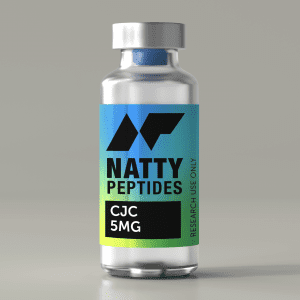
CJC-1295 without DAC is a synthetic 29-amino-acid peptide analogue of growth hormone-releasing hormone (GHRH) . Also known as Modified GRF 1-29 or CJC-1295-no DAC, it was developed to stimulate the release of growth hormone from the pituitary gland while mimicking the body’s natural pulsatile release pattern . Understanding its distinct origins and mechanisms provides important context for researchers studying GH pathways.
The History & Origins
The original CJC-1295 molecule containing the Drug Affinity Complex (DAC) was developed in the mid-2000s by ConjuChem Biotechnologies as a long-acting GHRH analogue . Studies on CJC-1295 with DAC were first published in 2006, but ConjuChem withdrew the compound from clinical trials later that year .
CJC-1295 without DAC first appeared in the literature in 2010, when Norwegian authorities identified it in an unknown pharmaceutical preparation seized by police and customs . This discovery revealed that manufacturers were producing and distributing the non-DAC version of the peptide, which lacks the C-terminal lysine extension that enables albumin binding.
There is evidence that compounding with forms of CJC-1295 has occurred since at least 2018 . The peptide has gained attention in research and bodybuilding communities, though it remains an investigational compound with no FDA approval for any indication and is classified as a prohibited substance under the WADA S2 category .
How It Works: Distinct Mechanisms
CJC-1295 without DAC operates through a well-defined mechanism of action that distinguishes it from its DAC-conjugated counterpart.
GHRH Receptor Agonist Mechanism
-
Binds pituitary GHRH receptors — The peptide binds to GHRH receptors on somatotroph cells of the anterior pituitary, triggering Gs-coupled receptor signaling that leads to adenylyl cyclase activation, cAMP accumulation, and protein kinase A (PKA) phosphorylation . This stimulates GH gene transcription and pulsatile GH secretion.
-
Stimulates GH and IGF-1 release — CJC-1295 increases the secretion of growth hormone and subsequently insulin-like growth factor 1 (IGF-1) . In primary rat anterior pituitary cells, the peptide stimulates GH secretion at picomolar to micromolar concentrations .
Pulsatile Release Pattern
-
Mimics natural GH pulses — Without the DAC moiety, the peptide has a short half-life of approximately 30 minutes . This short half-life allows it to stimulate GH release in a pulsatile manner, closely resembling the body’s natural GH secretion patterns .
-
Frequent dosing required — The short half-life necessitates more frequent administration, typically 1 to 3 times daily , to maintain elevated GH levels .
CJC-1295 With DAC vs. Without DAC
The two forms of CJC-1295 are structurally related but pharmacologically different compounds .
| Feature | Without DAC | With DAC |
|---|---|---|
| Half-Life | ~30 minutes | 6-8 days |
| Dosing Frequency | 1-3 times daily | Once or twice weekly |
| Mechanism | Pulsatile GH release mimicking natural pulses | Continuous receptor stimulation; sustained GH elevation |
| Structure | Lacks C-terminal lysine extension for albumin binding | Contains DAC moiety enabling albumin conjugation |
| GH Release Pattern | Short, sharp pulses | Extended, tonic GH elevation |