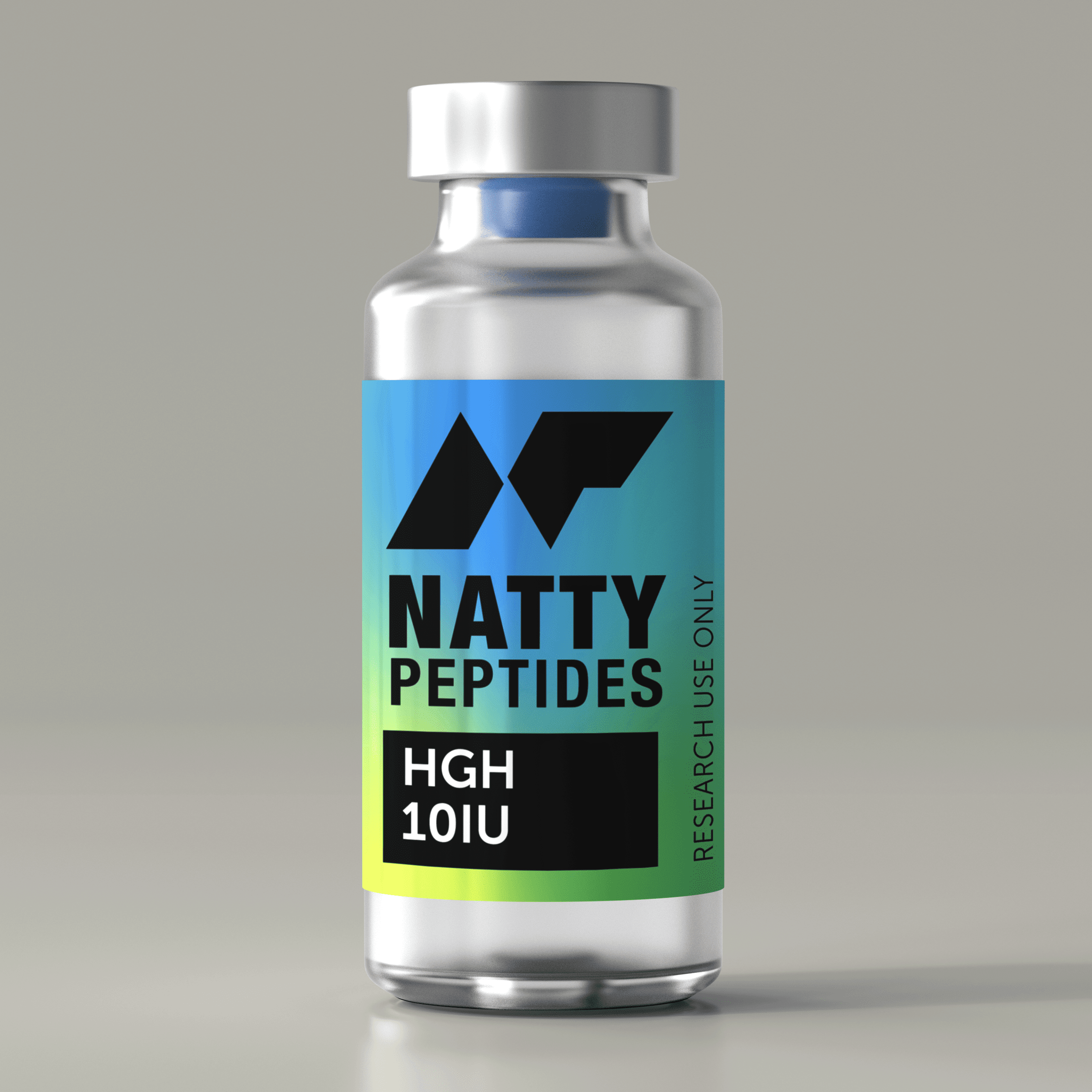
View HGH Certificate of Analysis
Why Choose HGH 191AA (Somatropin)?
Somatropin is a recombinant human growth hormone (rhGH) that is structurally identical to the 191-amino-acid polypeptide hormone naturally produced by the anterior pituitary gland. As a cornerstone of modern endocrine research and therapy, it represents one of biotechnology’s landmark achievements, evolving from scarce cadaver-derived extracts to a pure, well-characterized therapeutic protein. Understanding its distinct origins and mechanisms provides important context for researchers.
The History & Origins
Human growth hormone (HGH), also known as somatotropin, is a 191-amino-acid single-chain polypeptide produced by somatotropic cells within the anterior pituitary gland. It plays an essential role in growth regulation during childhood and regulates many basal metabolic functions including muscle and fat mass, blood glucose, and lipid regulation.
Recombinant HGH has been commercially available since 1985 following its development by Genentech. The first recombinant product, somatrem (also known as Met-hGH), contained an additional methionine amino acid at the N-terminus (192 amino acids total) due to the inclusion body production method used. This extra methionine triggered antibody formation in 50-80% of users, sometimes neutralizing the hormone’s effectiveness and causing allergic reactions.
Somatrem was largely replaced by somatropin (191 amino acids), which is identical in structure to endogenous human growth hormone. The transition from cadaver-derived HGH—which was linked to fatal brain disorders—to recombinant somatropin was critically accelerated by the public health crisis of iatrogenic Creutzfeldt-Jakob disease in the 1980s.
How They Work: Distinct Mechanisms
Somatropin operates through a well-defined mechanism of action centered on the growth hormone receptor (GHR), a transmembrane protein belonging to the cytokine/hematopoietic receptor superfamily.
GHR Binding and Signal Transduction
-
Receptor dimerization — One molecule of growth hormone binds to two GHR molecules, inducing receptor dimerization.
-
JAK-STAT pathway — Receptor activation triggers Janus kinase 2 (JAK2) phosphorylation, leading to the phosphorylation of STAT1, STAT3, and STAT5 transcription factors. These form dimers and translocate to the nucleus to regulate transcription of GH-responsive genes.
-
MAPK pathway — Growth hormone activates the mitogen-activated protein kinase (MAPK) pathway via JAK2-mediated phosphorylation of SHC proteins, influencing cellular replication and growth.
Direct and Indirect Effects
Somatropin exerts direct tissue and metabolic effects as well as indirect effects mediated by insulin-like growth factor-1 (IGF-1):
-
Direct effects include stimulation of lipolysis, hepatic glucose output, and protein synthesis. GH binds to receptors on myocytes, hepatocytes, adipocytes, lymphocytes, and hematopoietic cells.
-
Indirect effects are primarily mediated through hepatic production of IGF-1, which drives the majority of GH’s anabolic and growth-promoting effects, including chondrocyte differentiation and proliferation, and skeletal growth.
Metabolic and Anabolic Actions
-
Growth — Stimulates skeletal growth at the epiphyseal plates of growing bones through direct GH effects and IGF-1 mediation.
-
Protein anabolism — Promotes cellular protein synthesis and nitrogen retention, increasing lean body mass.
-
Lipolysis — Stimulates lipid metabolism and breakdown of triglycerides in adipose tissue, reducing body fat stores.
-
Carbohydrate metabolism — May induce insulin resistance; large doses can impair glucose toleranc