What is TB-500?
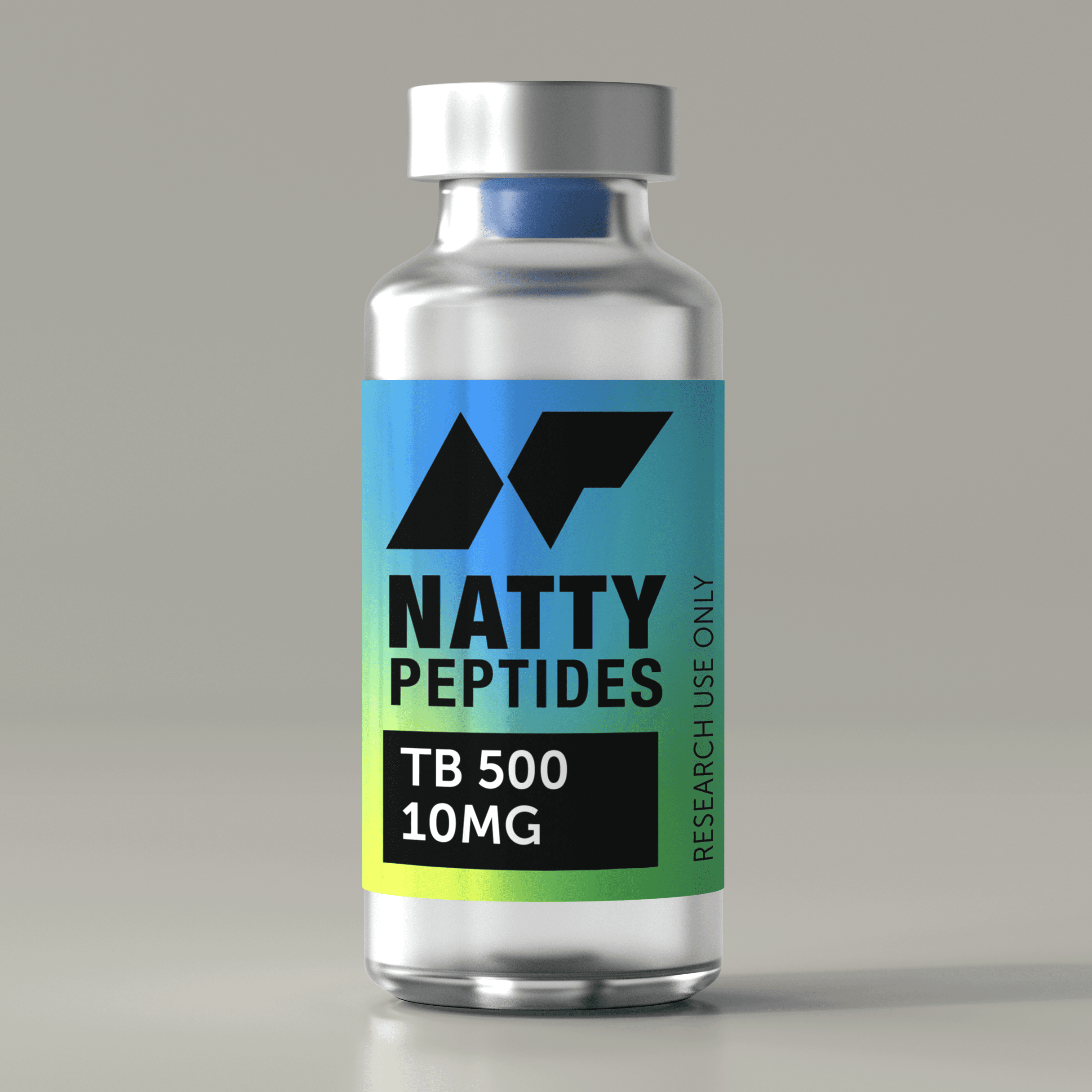
Think of TB-500 as a master repair signal for your body’s structural systems. It is a synthetic version of a key piece of a natural protein called Thymosin Beta-4, which is found in high concentrations in healing tissues. Its primary researched role is to act as a powerful orchestrator of the body’s repair processes, especially for muscles, tendons, ligaments, and the cardiovascular system.
The Main Benefits Researchers Look At:
-
Accelerating Tissue Repair: This is the core focus. TB-500 is studied for its exceptional ability to speed up the healing of injured connective tissues and muscle fibers. It promotes cell migration, proliferation, and the formation of new blood vessels—all essential steps for repair.
-
Reducing Inflammation: A major area of interest is its potent ability to calm excessive inflammation at an injury site. By controlling this initial inflammatory response, research aims to see if it can create a better environment for faster, cleaner healing.
-
Increasing Flexibility & Mobility: Researchers examine its potential to reduce the formation of rigid scar tissue (fibrosis) and increase the production of flexible building blocks like actin. This is key for studies on restoring full range of motion and pliability after an injury.
-
Promoting Angiogenesis: TB-500 is researched for its role in signaling the body to build new capillaries (tiny blood vessels). This improved blood flow delivers more oxygen and nutrients to damaged areas, which is vital for the entire healing process.
How Researchers Might Use It (Subcutaneous Injection with Bac Water):
TB-500 is typically studied via subcutaneous injection after reconstitution with bacteriostatic water (bac water).
Here’s a simple step-by-step of how a study might be set up:
-
Mixing: The researcher takes a vial of TB-500 (a lyophilized powder) and injects a precise amount of sterile bac water into it. They swirl the vial gently until the powder is completely dissolved, creating a clear solution.
-
Injecting: Using a small insulin syringe, a measured dose is injected just under the skin into the subcutaneous fat layer, commonly in the abdomen or near the site of a studied injury. The injection itself is shallow and straightforward.
Why This Method?
-
Systemic and Site-Responsive Action: Unlike compounds that only work at the injection site, TB-500 is studied for its “systemic” effect. Injecting it subcutaneously allows it to enter circulation and travel throughout the body to find areas of damage or inflammation, making it ideal for studying hard-to-reach injuries like deep muscle strains or joint issues.
-
Effective Bioavailability: The peptide would be broken down if taken orally. Injection guarantees the molecule remains intact to deliver its repair instructions to cells throughout the body.
-
Mimics Natural Signaling: The body releases its own Thymosin Beta-4 in response to injury. A subcutaneous injection provides a sustained, elevated level of this signal, allowing researchers to study how amplifying this natural process affects the entire healing timeline.
-
Precision and Consistency: This method allows for exact, repeatable dosing. This control is essential for measuring clear changes in recovery rates, inflammation markers, and tissue strength over time.
The Goal of the Research:
The primary aim is to understand how amplifying the body’s master repair signal can optimize recovery from physical trauma. Researchers track reduced healing times for standard injuries, measure decreases in inflammatory markers, and assess improvements in tensile strength and flexibility of repaired tendons or ligaments. The goal is to map the complete pathway from systemic signaling to localized structural repair, providing insights into therapeutic interventions for muscle, connective tissue, and vascular injuries.
In simple terms: By mixing TB-500 with bac water and using a simple under-the-skin injection, researchers have a method to send a powerful “repair crew dispatch” signal throughout the body, allowing them to study how to speed up healing, reduce scarring, and improve recovery in damaged muscles, tendons, and ligaments.
TB-500 is a synthetic version of Thymosin Beta-4, a naturally occurring peptide linked to healing and recovery. This peptide has been studied for its role in actin regulation, a protein essential for cell structure and mobility, making it a powerful compound in regenerative research. TB-500 is of particular interest for its systemic activity, as it circulates widely to reach injured or stressed tissues, helping support repair. Studies suggest it accelerates recovery of muscles, ligaments, and tendons, while also reducing inflammation and promoting flexibility. In addition, TB-500 stimulates angiogenesis (new blood vessel formation), which improves circulation and oxygen delivery. Its broad regenerative properties make it a cornerstone peptide in studies of recovery, cardiovascular health, and tissue resilience.