View GHRP-2 Certificate of Analysis
Why Choose GHRP-2 Acetate?
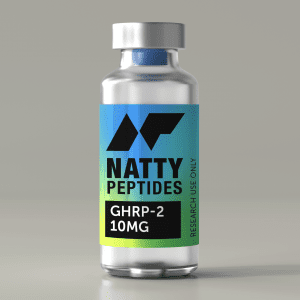
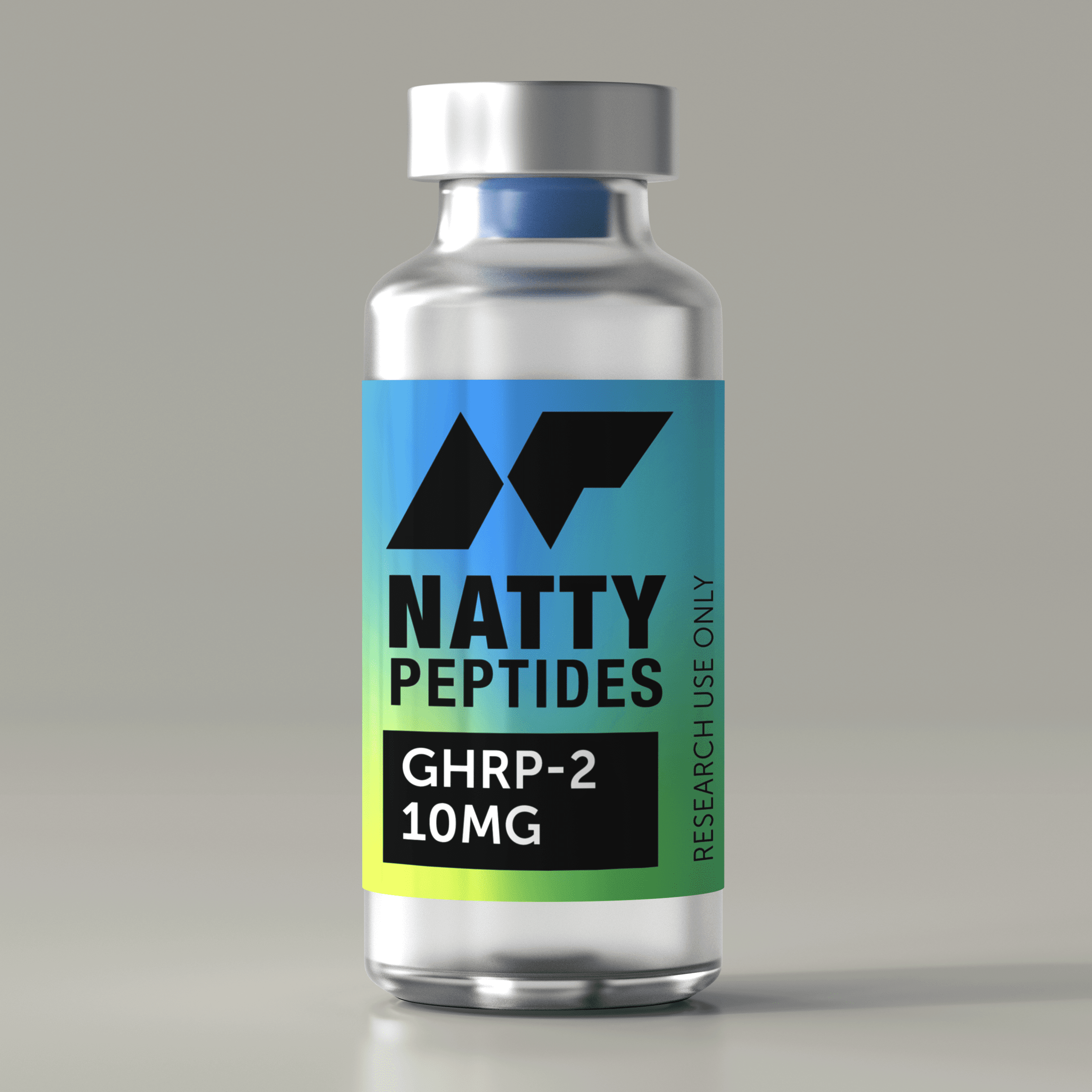
GHRP-2 (Growth Hormone-Releasing Peptide 2), also known as Pralmorelin, is a synthetic hexapeptide that functions as a potent agonist of the growth hormone secretagogue receptor (GHS-R1a), commonly referred to as the ghrelin receptor . It is distinguished as one of the most potent peptides in the GHRP class, being approximately 10-fold more potent than earlier generations like GHRP-6 and GHRP-1 in certain research models . Understanding its distinct origins and mechanisms provides important context for researchers studying the ghrelin-GHSR axis, endocrine regulation, and beyond.
The History & Origins
GHRP-2 was developed as a small synthetic peptide consisting of six amino acids, designed to be a highly potent and specific secretagogue for growth hormone (GH) . The peptide is known by its synonym Pralmorelin (INN) and has advanced to a stage where it has been investigated in clinical settings, with an approved status for research related to growth hormone deficiency in some contexts . It is a second-generation compound in the family of GH secretagogues and is part of the research that ultimately led to the discovery of ghrelin as the endogenous ligand for the GHS-R1a . Its unique structure incorporates unnatural amino acids, such as D-β-Nal (D-3-(2-naphthyl)-alanine), which confer stability and contribute to its high potency .
How They Work: Distinct Mechanisms
GHRP-2 operates through a well-characterized mechanism of action, primarily by binding to and activating the ghrelin receptor. However, its signaling pathways and research applications extend beyond simple GH release.
Ghrelin Receptor (GHS-R1a) Agonist Mechanism
-
Receptor binding — GHRP-2 is a full agonist at the growth hormone secretagogue receptor 1a (GHS-R1a), the same receptor targeted by the endogenous hormone ghrelin .
-
Signaling pathways — Activation of GHS-R1a by GHRP-2 stimulates various intracellular signaling cascades. In some species (such as bovine and ovine), this includes both the phospholipase-C pathway, leading to a rise in intracellular calcium, and the cAMP/protein kinase A pathway . The specific signaling pathways activated can show species differences .
-
Calcium mobilization and kinase activation — GHRP-2’s GH-releasing effect is heavily dependent on an influx of extracellular calcium via voltage-dependent calcium channels . It also activates protein kinase C (PKC) and uses cAMP pathways in certain research models .
Stimulation of Growth Hormone Release
-
Potent GH secretagogue — GHRP-2 potently stimulates the secretion of growth hormone from pituitary cells in a dose-dependent manner, demonstrating similar potency to Growth Hormone-Releasing Factor (GRF) in some systems .
-
Synergy with GHRH — A key feature of GHRP-2 is its ability to act synergistically with GRF (GHRH). When co-administered, they produce an additive effect on GH release, indicating they act through different, complementary pathways .
-
Cross-desensitization with GHRP-6 — GHRP-2 and GHRP-6 share the same receptor mechanism. Cells desensitized to GHRP-6 will not respond to GHRP-2 and vice versa, confirming they act via the same receptor .
Beyond Growth Hormone: Expanding Research Applications
-
Anti-inflammatory effects — Research demonstrates GHRP-2 has significant anti-inflammatory properties. In human ovarian granulosa cells, it attenuated the expression of key inflammatory mediators like COX-2 and IL-8 by suppressing the activation of p38, JNK, and NF-κB pathways .
-
Antinociceptive effects — In mice, intracerebroventricular administration of GHRP-2 produced a concentration-dependent antinociceptive (pain-reducing) effect at the supraspinal level. This effect was mediated through GHS-R1a and involved the central opioid system (δ- and κ-opioid receptors), indicating a novel interaction between the ghrelin and opioid systems in pain modulation .